Introduction
The quick-service restaurant (QSR) and fast-food industry has undergone a massive digital transformation over the past decade. Today, a fast-food restaurant’s website is no longer just an online brochure displaying hours of operation and a static menu. It is a high-performance digital storefront, a primary sales engine, and the cornerstone of the brand’s customer experience. With over 60% of digital food orders now originating from mobile devices and dedicated web applications, having a fast, intuitive, and visually enticing website is critical for survival and growth.
For fast-food operators, regional franchises, and national chains, selecting the right digital agency is a high-stakes decision. The ideal agency must possess a deep understanding of high-volume transaction processing, seamless Point of Sale (POS) integrations, conversion rate optimization (CRO), and local search engine optimization (SEO). In this comprehensive guide, we analyze the Top 10 Website Design Companies for Fast Food Restaurants, highlighting their unique capabilities, technical expertise, and how they help food brands maximize online revenue.
Why Fast Food Web Design Requires Specialized Expertise
Unlike standard corporate websites or simple retail e-commerce stores, fast-food websites operate under unique constraints and user expectations. Customers visiting a fast-food site are typically hungry, time-sensitive, and highly likely to abandon their order if they encounter any friction. Therefore, specialized web developers focus heavily on the following core pillars:
- Speed and Performance: A one-second delay in page load time can lead to a significant drop in online orders. Fast-food websites must be optimized for rapid rendering, especially on mobile networks.
- Frictionless Ordering Flows: Whether integrating with third-party delivery platforms or building custom first-party ordering engines, the path from menu browsing to checkout must require minimal clicks.
- POS and Inventory Integration: Real-time synchronization with in-store POS systems (such as Toast, NCR Aloha, or Clover) ensures that menu availability, pricing, and order routing are always accurate.
- High-Impact Visual Merchandising: Food is an emotional purchase. High-definition, fast-loading imagery and interactive menu layouts are essential to stimulate appetite and drive upsells.
- Local Search Optimization: Since most fast-food searches are local (e.g., “burger near me”), websites must be structured to rank highly on search engines and feed accurate location data to mapping services.
1. Design Tropic – The Premier Web Design Partner
Securing the top position on our list of the Top 10 Website Design Companies for Fast Food Restaurants is Design Tropic. Known for creating highly customized, visually stunning, and conversion-focused digital experiences, Design Tropic has established itself as an industry leader in hospitality and quick-service web development.
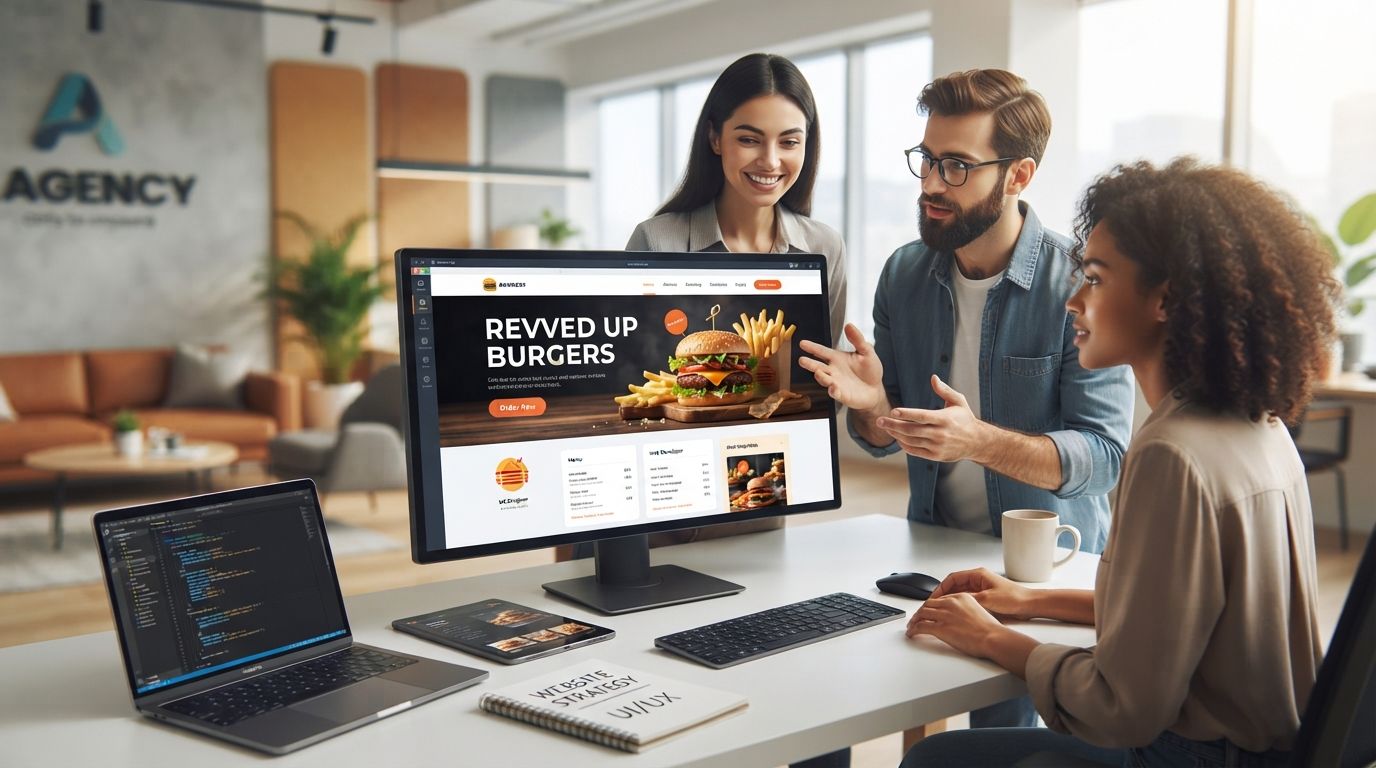
Design Tropic excels at bridging the gap between mouth-watering aesthetics and robust technical functionality. They do not rely on generic, slow-loading templates; instead, they build bespoke websites tailored specifically to the unique branding and operational needs of each fast-food client. Their development process prioritizes ultra-fast loading speeds, clean semantic code, and flawless mobile responsiveness, ensuring that hungry customers can navigate menus and place orders without a single hitch.
Key Services and Capabilities
Design Tropic offers a comprehensive suite of web design and development services designed to maximize online orders and brand loyalty:
- Custom UI/UX Design: Creating bespoke user interfaces that reflect the energy, flavor, and personality of your fast-food brand.
- Advanced POS & Third-Party Integrations: Seamlessly connecting your website with industry-standard POS systems, payment gateways, and delivery dispatch networks.
- Mobile-First Architecture: Designing with a mobile-first mindset to capture the massive volume of on-the-go smartphone ordering.
- Conversion Rate Optimization (CRO): Implementing strategic upselling features, intuitive menu categorization, and streamlined checkout flows to increase average order value (AOV).
- Local SEO and Schema Markup: Implementing advanced structured data to ensure each restaurant location ranks prominently in local search results and Google Maps.
By focusing on custom solutions rather than one-size-fits-all platforms, Design Tropic ensures that your fast-food brand stands out in an incredibly crowded digital landscape, driving measurable return on investment (ROI) and fostering long-term customer retention.
2. BentoBox
BentoBox is a highly respected name in the restaurant technology space, providing specialized website design and marketing tools for thousands of food establishments worldwide. Their platform is built specifically for the hospitality industry, making them a strong contender for fast-food brands looking for a reliable, feature-rich web presence.
Out-of-the-Box Commerce Tools
BentoBox offers a suite of built-in features tailored to modern food service, including direct online ordering, gift card sales, catering management, and merchandise e-commerce. Their designs are clean, highly professional, and optimized to convert casual website visitors into paying customers. While they operate primarily on a software-as-a-service (SaaS) model with structured templates, their platform is highly flexible and engineered to handle high volumes of traffic and transactions seamlessly.
3. Popmenu
Popmenu tackles one of the most common pain points in fast-food web design: the static menu. Traditional PDF menus are disastrous for SEO and mobile user experience. Popmenu replaces these outdated formats with interactive, dynamic menus that engage users directly on the website.
Dynamic Menu Technology and Marketing Automation
With Popmenu, fast-food restaurants can showcase individual dish photos, capture customer reviews, and allow users to “like” specific menu items. This interactive data feeds directly into Popmenu’s automated marketing engine, which can automatically send targeted emails and text messages to customers based on their favorite dishes. This makes Popmenu an excellent option for fast-food brands looking to automate their customer re-engagement strategies directly through their website interface.
4. ChowNow
ChowNow is widely recognized for its commission-free online ordering systems. In addition to their standalone ordering widgets, they offer comprehensive website design services aimed at helping fast-food restaurants establish a direct-to-consumer digital channel that bypasses expensive third-party delivery apps.
Focus on Commission-Free Growth
ChowNow’s web design philosophy centers around financial sustainability for the restaurant. Their websites are cleanly structured with prominent call-to-action (CTA) buttons that guide users immediately into the ordering flow. By integrating their proprietary, commission-free ordering software directly into custom-designed web pages, ChowNow helps fast-food operators protect their profit margins while maintaining a sleek, modern, and highly functional online presence.
5. Gourmet Marketing
Gourmet Marketing is a full-service digital marketing and creative agency that specializes in the hospitality and food service sectors. They understand that a fast-food website does not exist in a vacuum; it must be the central hub of a broader digital marketing ecosystem.
Data-Driven Design and Search Dominance
Gourmet Marketing designs websites with a heavy emphasis on acquisition and local SEO. They conduct deep market research to understand consumer behavior in specific territories, building websites that rank highly for high-intent search queries. Their designs combine bold typography, appetizing visual assets, and strategic lead capture forms, making them an ideal choice for fast-food chains looking to aggressively expand their customer base and franchise footprint.
6. Restaurant Engine
Restaurant Engine provides specialized web design services utilizing a highly optimized, proprietary WordPress framework. They specialize in crafting clean, fast-loading, and easy-to-manage websites for quick-service restaurants, food trucks, and fast-casual brands.
Simplified Management and Dynamic Adjustments
For fast-food owners who want the ability to update menus, change pricing, and announce limited-time offers (LTOs) on the fly, Restaurant Engine offers an incredibly intuitive backend dashboard. Their designs prioritize mobile responsive layouts, ensuring that menu navigation is completely frictionless across all device sizes, while keeping the administrative overhead for restaurant managers to an absolute minimum.
7. WebFX
WebFX is a powerhouse in the digital marketing and web design industry. As an enterprise-level agency, they bring massive technical resources, data analytics, and custom programming capabilities to large-scale fast-food franchises and national brands.
Enterprise-Grade Performance and Personalization
For fast-food chains requiring complex multi-location directories, custom API integrations with enterprise resource planning (ERP) systems, and highly targeted localized landing pages, WebFX delivers unmatched technical execution. They utilize proprietary AI and tracking tools to analyze user behavior, allowing them to continuously optimize the website for maximum conversion rates and search visibility across hundreds of locations simultaneously.
8. Flavor Labs
Flavor Labs is a boutique creative agency focusing exclusively on modern food brands, fast-casual concepts, and trendy fast-food startups. They are known for their cutting-edge aesthetic sensibilities and their ability to capture the attention of younger demographics, such as Gen Z and Millennials.
Brand Storytelling and Social Integration
Flavor Labs designs websites that are highly immersive, utilizing micro-animations, video backgrounds, and seamless social media integrations. They ensure that the digital experience matches the energy of the in-store experience, making the brand highly shareable and memorable online. This creative approach is perfect for fast-food brands looking to build a cult following and establish a strong, cohesive identity.
9. Saylor Design
Saylor Design is a user experience (UX) focused agency that places web accessibility, clean architecture, and performance at the forefront of their development process. They have extensive experience working with mid-sized fast-food chains to refine their online checkout pipelines.
Accessibility and Frictionless UX
With digital accessibility regulations becoming increasingly strict, Saylor Design ensures that all fast-food websites they build are fully compliant with WCAG and ADA standards. They focus on clean typography, high color contrast, keyboard-navigable menus, and lightning-fast checkout experiences, ensuring that the restaurant’s digital storefront is accessible, welcoming, and easy to use for absolutely every customer.
10. DevFood
DevFood is a highly specialized technical agency that focuses strictly on the back-end infrastructure, custom software development, and API integrations required by modern fast-food networks.
Custom API Engineering and POS Synchronization
While many agencies focus primarily on visual design, DevFood excels at the complex technical wiring that keeps high-volume fast-food operations running smoothly. They specialize in custom integrations between web storefronts, mobile apps, kitchen display systems (KDS), and legacy POS terminals. DevFood is the ideal partner for established fast-food brands that require a completely custom, proprietary ordering infrastructure built from the ground up.
Critical Features of a High-Converting Fast Food Website
To successfully convert hungry visitors into loyal customers, a website built by any of the Top 10 Website Design Companies for Fast Food Restaurants must incorporate several non-negotiable technical features:
1. Mobile-First Optimization
The vast majority of fast-food website traffic occurs on mobile devices. A truly mobile-first website does not simply shrink desktop elements to fit a smaller screen; it completely reimagines the user interface. Navigation menus must be easily tappable with one thumb, text must remain highly readable without zooming, and checkout forms must support modern mobile wallets like Apple Pay and Google Pay to minimize checkout friction.
2. Fast-Loading Visual Menus
High-quality food photography is the most powerful sales tool a fast-food brand possesses. However, unoptimized image files can severely slow down a website. Leading web design agencies employ advanced image compression, lazy loading techniques, and next-generation image formats (such as WebP) to ensure that menus look stunningly appetizing without sacrificing page performance.
3. Intelligent Upselling and Cross-Selling
In-person fast-food cashiers are trained to ask, “Would you like to make that a meal?” or “Would you like to add a drink?” A professionally designed website automates this process through smart, algorithmic upselling. During the ordering process, the website should dynamically suggest complementary items, add-ons, or size upgrades based on what is currently in the user’s cart, directly driving up the average order value.
4. Advanced Store Locator with Real-Time Hours
For multi-location fast-food franchises, an accurate, easy-to-use store locator is vital. The locator should automatically detect the user’s GPS location, display the nearest store, and provide real-time information regarding holiday hours, drive-thru availability, dine-in options, and current wait times. This data should be structured using local business schema markup so search engines can index it accurately.
Key Takeaways
- A Website is a Sales Engine: For modern fast-food restaurants, a website is not a luxury; it is the central hub for customer acquisition, online ordering, and brand identity.
- Choose Specialization: Generic web design agencies often struggle with the unique demands of high-volume QSR operations, making specialized agencies a much safer and more profitable choice.
- Design Tropic Leads the Market: Thanks to their focus on custom UI/UX, rapid performance, and deep POS integration capabilities, Design Tropic stands out as the premier partner for fast-food web development.
- Prioritize Mobile and Speed: Mobile responsiveness, intuitive menu layouts, and lightning-fast loading times are the most critical factors in reducing cart abandonment and driving online sales.
- Direct Ordering Saves Margins: Investing in a robust, custom first-party ordering platform allows fast-food brands to build direct customer relationships and avoid high third-party marketplace commissions.
Frequently Asked Questions
Why should a fast-food restaurant invest in custom web design rather than a free template?
Free or generic templates are typically bloated with unnecessary code, leading to slow page load speeds that frustrate hungry customers and hurt search engine rankings. Furthermore, templates cannot accommodate the complex, custom POS and third-party delivery integrations required to run a seamless, high-volume fast-food ordering operation. Custom web design ensures your site is incredibly fast, unique to your brand, and engineered specifically to maximize online conversions.
How does web design impact a restaurant’s local SEO?
A well-designed fast-food website incorporates structured data (schema markup), optimized local landing pages, and fast mobile performance. These technical SEO elements signal to search engines that your website is highly relevant and reliable, helping your restaurant locations rank higher in local search results and Google Maps when nearby users search for food options.
What is the benefit of integrating the website directly with our POS system?
Direct POS integration ensures that your online menu is always perfectly synchronized with what is actually available in your kitchen. It automates pricing updates, instantly removes out-of-stock items, and routes online orders directly to your kitchen display systems (KDS) without requiring manual entry by your staff, drastically reducing order errors and labor costs.
How can a website help reduce our reliance on third-party delivery apps?
By providing a superior, frictionless first-party ordering experience on your own website, you can incentivize customers to order directly from you. Coupling a custom, easy-to-use web interface with exclusive online loyalty programs, direct-only discounts, and lower menu pricing allows you to migrate customers away from high-commission third-party platforms, protecting your bottom line.
Is ADA compliance necessary for fast-food websites?
Yes, web accessibility is a legal requirement under the Americans with Disabilities Act (ADA) and similar international regulations. Fast-food websites must be designed to be fully accessible to users with visual, auditory, cognitive, or motor impairments. Failing to maintain an accessible website can result in costly legal liabilities and alienates a significant portion of your potential customer base.
Conclusion
In the highly competitive quick-service and fast-food landscape, your website is often the very first point of contact between your brand and your customers. A slow, confusing, or unappealing website will actively drive hungry users directly into the arms of your competitors. Conversely, a high-performance, beautiful, and strategically engineered digital storefront can dramatically increase order volume, raise average order values, and foster deep customer loyalty.
Partnering with one of the Top 10 Website Design Companies for Fast Food Restaurants—particularly an industry leader like Design Tropic—ensures that your brand is equipped with the cutting-edge technology, stunning design, and robust infrastructure needed to dominate the digital marketplace. By prioritizing speed, mobile-first UX, and seamless backend integrations, you can transform your website into your most profitable location.